Tag: Digital Marketing

  • What is Social Media Management? The Ultimate Growth Guide

    What is Social Media Management? The Ultimate Growth Guide

    What is Social Media Management? The Ultimate Growth Guide

    Ready to transform your online channels into highly profitable engines? Effective Social Media Management helps you cut through the digital noise, build authentic brand trust, and systematically turn casual platform scrollers into loyal customers.

    Industry Data Point

    Recent consumer data reveals that 78% of online searchers prefer buying from brands that provide helpful customer care via social channels rather than automated phone lines.

    Table of Contents

    • 1. Introduction to Modern Audience Building
    • 2. What is Social Media Management?
    • 3. Why Social Media Management Matters
    • 4. Core Social Media Management Services
    • 5. Platforms Managed Strategically
    • 6. The Strategic Blueprint Process
    • 7. Business Verticals That Profit Most
    • 8. Common Pitfalls to Avoid
    • 9. Actionable Optimization Tips
    • 10. In-House vs. Professional Management
    • 11. Frequently Asked Questions

    Modern business survival requires a hyper-focused strategy. Brands no longer rely simply on local foot traffic or cold outbound email sequences to stay afloat. Instead, your future customer base reads consumer reviews, looks up your company on social networks, and engages with your media day and night.

    Consequently, launching an active web presence is crucial. If your brand publishes erratic updates or ignores inbound comments, you open the door wide for your direct competitors to step in. A streamlined system handles this heavy lifting, allowing you to focus on your primary operational tasks.

    Ultimately, this discipline transforms your cold profiles into trusted community channels. When you regularly publish useful insights, you generate deep brand awareness and establish long-term customer relationships. Let’s look closer at how this functional mechanism impacts your bottom-line sales metrics.

    What is Social Media Management?

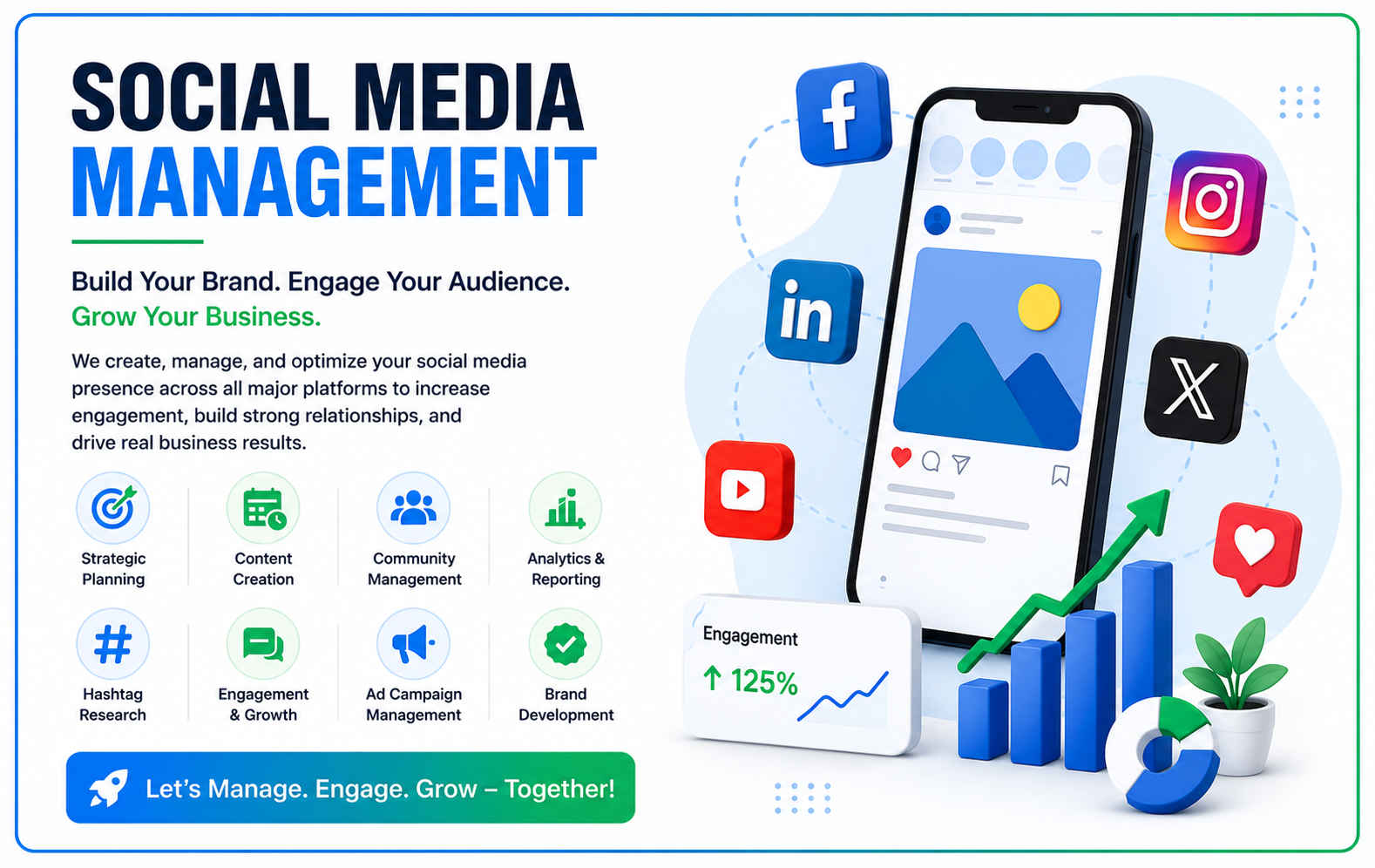
    At its core, Social Media Management is the organized practice of creating, publishing, auditing, and analyzing media across public channels like Facebook, Instagram, LinkedIn, and YouTube. It extends far beyond clicking a button to post a casual picture. It requires a balanced mix of creative design, data analytics, and real-time customer support.

    A dedicated Social Media Manager takes full control of these networks. Their day-to-day workflow includes mapping out editorial calendars, refining brand graphics, monitoring brand performance, and answering direct messages from prospective clients.

    The ultimate goal of this corporate asset is sustainable, organic online brand management. By setting up predictable publishing systems, small businesses can easily build authority, lower their customer acquisition costs, and maximize their advertising ROI.

    Why Social Media Management Matters

    Without a structured media distribution plan, your brand remains virtually invisible. An ongoing investment in web management pays substantial dividends by expanding your overall market reach and building reliable customer trust.

    First, consistent updates build exceptional brand awareness. When your business profile provides actionable answers to common client questions, social algorithms reward that content with broader distribution. This organic visibility shifts your marketing funnel from expensive outbound tactics to highly efficient inbound channels.

    Second, active digital platforms foster reliable consumer confidence. When an interested buyer lands on a business page and notices active conversation, quick response times, and polished aesthetics, they feel secure moving forward with a purchase.

    Core Social Media Management Services

    Deploying comprehensive digital solutions requires multiple distinct disciplines. Enterprise-level campaigns typically integrate these essential operational components:

    1. Data-Driven Content Planning

    A successful strategy avoids random, last-minute posting. Instead, teams map out a structured content calendar at least thirty days in advance. This approach balances educational pieces, product updates, and interactive community polls to keep your channels highly engaging.

    2. Specialized Social Media Content Creation

    This step includes designing custom brand visuals and editing vertical videos for Reels or Shorts. Polished media captures immediate attention in crowded feeds, while expertly written captions encourage users to click through to your website landing pages.

    3. Proactive Community Management

    Profiles shouldn’t function like one-way billboards. Dedicated community managers actively handle comments, answer direct product questions, and spark dialogue under every update. This personal interaction turns passive viewers into true brand advocates.

    4. Advanced Analytics & Competitor Tracking

    Growth requires clear numbers, not guesswork. Monthly performance reports audit key data points like impression share, click-through rates, and audience demographic shifts. This continuous review lets teams double down on the creative formats that drive actual business conversions.

    Platforms Managed Strategically

    Every social channel features unique demographic profiles, specialized technical formats, and distinct content delivery algorithms.

    Platform Primary Audience Focus Winning Content Format
    Facebook Management B2C Consumers & Local Communities Long-form Video, Community Events, Discussions
    Instagram Management Millennials & Gen Z Buyers Vertical Reels, Carousel Graphics, Story Sales
    LinkedIn Management B2B Professionals, SaaS & Corporate Founders Industry Insights, PDF Slide Decks, Thought Leadership
    Google Business Profile Local High-Intent Physical Searchers Geotagged Photos, Review Prompts, Offer Updates

    The Social Media Management Process

    Achieving consistent social media growth requires a repeatable, step-by-step strategy. This execution framework keeps campaigns running smoothly:

    1. Deep Business Analysis: Audit your existing active profiles, brand assets, and core commercial goals.
    2. Granular Target Audience Research: Identify exactly where your perfect customers look for solutions.
    3. Strategic Social Media Marketing Roadmapping: Define your key performance indicators (KPIs) and core content pillars.
    4. Dynamic Content Creation: Design high-performing visual assets and write engaging captions.
    5. Automated Social Media Scheduling: Queue your updates at optimal time slots to maximize reach.
    6. Live Monitoring and Interaction: Handle comments and messages to secure organic conversions.
    7. Continuous Monthly Optimization: Tweak your creative assets based on real audience data.

    Business Verticals That Profit Most

    Strategic digital management delivers massive value across diverse market sectors. For instance, **e-commerce stores** rely heavily on high-impact visual feeds to boost direct sales. Meanwhile, **local dental and medical clinics** use educational content to build patient trust within their local communities.

    In high-ticket spaces like **real estate and corporate consulting**, specialized platforms build deep industry authority. Consistently sharing case studies and client wins positions your firm as the obvious market leader, accelerating your sales cycle.

    Common Pitfalls to Avoid

    Many businesses accidentally stall their own online progress by falling into predictable execution traps. Review this list to keep your profiles safe from simple mistakes:

    • Irregular Publishing Routines: Ghosting your community for weeks signals that your business might be closed.
    • Ignoring User Comments: Leaving inbound client questions completely unanswered kills trust.
    • Buying Fake Followers: This trick ruins your organic engagement metrics and triggers shadowbans.
    • Overly Promotional Feeds: Treating channels like sales brochures drives users away.
    • Ignoring Account Analytics: Flying blind guarantees you waste budget on ineffective content.

    Actionable Optimization Tips

    Want to quickly improve your channel metrics? Put these immediate workflow upgrades into action this week:

    • Write Clear Hooks: Capture attention in the first two seconds of video scripts or text descriptions.
    • Optimize Your Bios: Ensure your business profile clearly explains the exact problems you solve.
    • Include Clear CTAs: Direct readers on exactly what to do next with clear “Click Link in Bio” prompts.
    • Repurpose High-Performing Content: Turn successful long-form articles into quick carousel graphics or short videos.

    In-House vs. Professional Management

    Many founders try to handle everything alone or hand these tasks off to an overworked internal assistant. However, this move often backfires, leading to erratic content quality and missed opportunities.

    “Outsourcing your social execution gives you instant access to a dedicated team of professional copywriters, graphic design experts, and analytics pros for a fraction of the cost of full-time hires.”

    Partnering with specialized Social Media Management Services ensures your strategy stays consistent, adapts to daily algorithm updates, and drives measurable revenue growth.

    Ready to Scale Your Brand Engagement?

    Building a highly profitable online community shouldn’t leave you feeling burnt out. Let our veteran production specialists handle your daily content planning, creative design, and growth optimization while you focus on running your business operations.

    Request an Expert Consultation


    Frequently Asked Questions

    What is Social Media Management?

    It is the comprehensive process of creating, planning, scheduling, analyzing, and engaging with content across social networks to build an audience and meet clear business goals.

    Why is Social Media Management important?

    It builds brand awareness, fosters customer trust, improves customer retention, and creates a reliable organic channel for inbound lead generation and website traffic.

    How much do Social Media Management services cost?

    Pricing usually scales based on project scope, ranging from $500 per month for basic startup packages to over $5,000 per month for enterprise multi-channel strategies handled by a dedicated agency.

    Which platforms should my business use?

    Focus strictly on the platforms where your target audience spends their time. For example, B2B companies excel using LinkedIn, while e-commerce brands see higher conversions on Instagram and TikTok.

    How often should I post?

    Consistency is much more important than raw volume. A good starting point is 3 to 5 high-quality posts per week on platforms like Instagram and Facebook, and 1 to 2 times daily on fast-paced networks like X.

    Does Social Media Management increase sales?

    Yes. By building a highly engaged audience and guiding them down a clear marketing funnel, it directly increases warm inbound leads and e-commerce revenue over time.

    How long does it take to see results?

    Organic growth requires patience. While engagement spikes can happen quickly, measurable business conversion improvements generally take 3 to 6 months of steady execution.

    How do I choose the right Social Media Management company?

    Look for a partner with proven case studies in your niche, clear reporting models, and a deep focus on business ROI over vanity metrics like follower counts.

  • The Ultimate Guide to Ecommerce Social Media Marketing: Drive Traffic, Engagement, and Explosive Sales

    The Ultimate Guide to Ecommerce Social Media Marketing: Drive Traffic, Engagement, and Explosive Sales

    The Ultimate Guide to Ecommerce Social Media Marketing: Drive Traffic, Engagement, and Explosive Sales

    In today’s digital marketplace, launching an online store is only the first step toward business success. With millions of brands competing for attention, how do you ensure your products stand out? The answer lies in a robust, data-driven Ecommerce Social Media Marketing campaign. Social media platforms have evolved from simple communication networks into powerful marketplace engines, fundamentally changing how consumers discover, interact with, and purchase products.

    Whether you are an established brand aiming for rapid ecommerce brand growth or a startup launching your first store, mastering Ecommerce Social Media Marketing is non-negotiable. This comprehensive guide explores actionable methodologies, platform dynamics, and proven frameworks to transform your social channels into high-yielding revenue streams.

    Is Your Store Reaching Its Full Potential?

    Maximize your revenue with a tailored marketing roadmap. Claim your complimentary strategy session today.

    Free Ecommerce Marketing Consultation →

    What is Ecommerce Social Media Marketing?

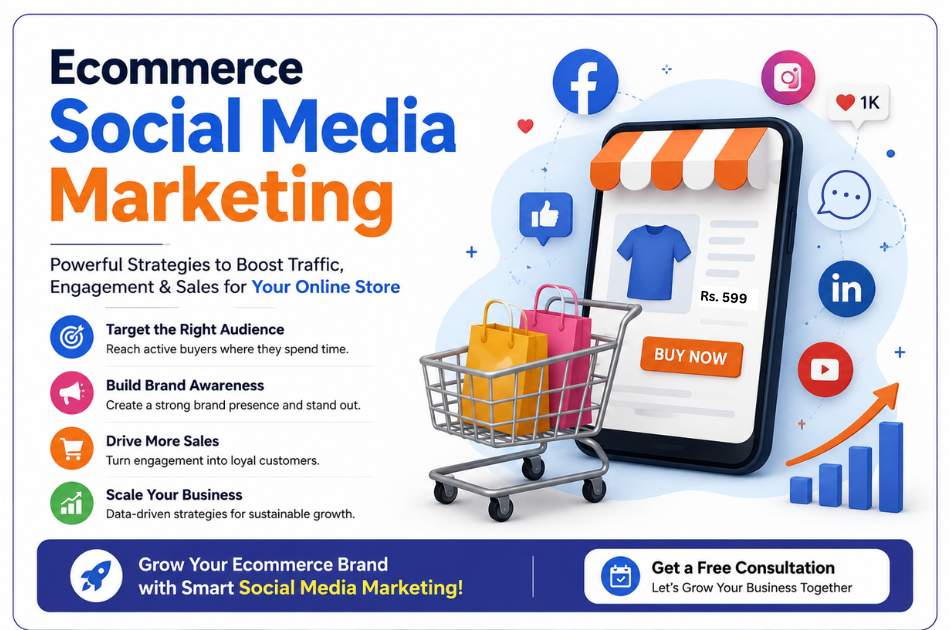
    At its core, Ecommerce Social Media Marketing is the practice of utilizing social media networks to market an online store, build brand equity, drive qualified website traffic, and directly acquire customers. This specialized branch of digital marketing encompasses organic content creation, community management, influencer partnerships, and sophisticated paid ecommerce social media advertising campaigns.

    Unlike traditional lead-generation campaigns, marketing via social media for online stores focuses heavily on visual commerce, frictionless checkout experiences, and instantaneous consumer actions. In 2026, successful Ecommerce Social Media Marketing merges social interactions with native shopping tabs, immersive video content, and automated customer support conversational funnels to create a unified buyer journey.

    Why Social Media Marketing Matters for Ecommerce Businesses

    Relying solely on organic search engine traffic or basic email newsletters is no longer sufficient to scale an online business. Implementing a dynamic social media marketing for ecommerce plan is essential for several critical reasons. First, visual commerce provides instant product discovery. Through optimized Ecommerce Social Media Marketing, brands can present products via interactive 3D models and high-definition galleries.

    Second, it leads to elevated ecommerce customer engagement. Social networks bridge the gap between anonymous transactions and meaningful relationships. Cultivating conversational touchpoints yields higher customer retention and long-term loyalty. Third, it allows hyper-targeted acquisition. Advanced data modeling and tracking pixels allow you to display specific items to users based on precise buying intents and detailed behavioral habits.

    Finally, it amplifies social proof. User-generated content (UGC), real-time customer reviews, and influencer endorsements create peer-to-peer trust that accelerates conversion metrics faster than conventional copywriting. To succeed, your ecommerce marketing strategy must align with these consumer behaviors.

    Top Social Media Platforms for Ecommerce Marketing

    When evaluating channels, Instagram remains the undisputed leader for product discovery. With seamlessly integrated native shopping features like product tagging, shoppable Reels, and curated creator storefronts, users can transition from browsing to buying within seconds. Investing in specialized Instagram Marketing Services helps businesses fully tap into these direct-purchase capabilities as part of their Ecommerce Social Media Marketing framework.

    Despite changing demographics, Facebook’s massive active user database offers unmatched opportunities for targeted paid campaigns. Utilizing dynamic product catalog ads allows online retailers to automatically display relevant items to users who previously engaged with their websites. Partnering with top-tier Facebook Ads Services can significantly optimize conversion costs within your broader Ecommerce Social Media Marketing setup.

    Proven Ecommerce Social Media Marketing Strategies

    Succeeding in competitive online spaces requires moving beyond sporadic updates. First, leverage authentic user-generated content (UGC) by incentivizing your existing customer base to post videos and unboxing experiences. Sharing authentic customer content on your main feeds builds profound consumer trust.

    Second, deploy smart retargeting funnels. A large percentage of shoppers abandon carts on their initial visit. Use advanced ecommerce social media advertising to re-engage warm prospects with limited-time discount codes or free shipping incentives. Third, integrate immersive social commerce by setting up native shops directly on Instagram, and Pinterest to reduce checkout friction and enhance your overall Ecommerce Social Media Marketing performance.

    Uncover Hidden Revenue Opportunities

    Get a comprehensive evaluation of your brand visibility, tracking setup, and competitor landscape.

    Free Social Media Audit →

    Common Mistakes to Avoid

    Many online brands pour substantial budgets into digital promotions without seeing tangible returns due to easily rectifiable operational errors. When executing Ecommerce Social Media Marketing, avoid prioritizing vanity metrics over conversions. High follower numbers look impressive, but your main focus should be on trackable metrics like click-through rates (CTR), add-to-cart ratios, and return on ad spend (ROAS). Also, avoid overly promotional feeds. Balance your sales pushes with entertaining educational reels and behind-the-scenes content.

    Benefits of Hiring a Professional Social Media Marketing Agency

    Managing creative content creation, complex data analytics, community engagement, and ad spend budget optimization internally can quickly overwhelm growing business teams. Partnering with a specialized team provides immediate advantages. Experienced agencies bring years of refined cross-industry insights to construct an optimized, high-converting ecommerce marketing strategy tailored to your unique market positioning, ensuring your investment in Ecommerce Social Media Marketing delivers measurable results.

    Instead of dividing your focus among multiple internal tasks, your core team can focus heavily on inventory logistics and customer fulfillment while experts handle your paid advertising assets. You also gain access to cutting-edge tools for precise audience tracking and deep behavioral analytics without costly standalone subscriptions. From implementing technical tracking tags to managing comprehensive Digital Marketing Services, an agency partner helps you scale predictably. If your underlying platform needs an overhaul, consider integrating comprehensive Ecommerce Website Development Services to ensure a smooth customer journey.

    Frequently Asked Questions (FAQs)

    Q1: How much budget should I allocate to paid ecommerce social media advertising?

    A: For startups, we recommend starting with a modest testing budget of $500 to $1,000 per month to identify winning product creatives. Established brands aiming for rapid ecommerce brand growth often allocate 10% to 25% of their gross monthly revenue toward scaled ad campaigns.

    Q2: Which platform yields the best returns for Ecommerce Social Media Marketing?

    A: Instagram and Facebook remain the most consistent channels for generating a steady return on investment across most consumer niches due to their mature ad targeting infrastructure.

    Q3: How often should an online store post new content on social media channels?

    A: Consistency is critical. We recommend publishing 3 to 5 short-form videos or high-quality image posts per week on video-centric channels like Instagram, while actively publishing daily updates to your Stories to maintain high ecommerce customer engagement metrics.

    Q4: What is the difference between organic reach and paid advertising?

    A: Organic marketing involves creating and publishing content to engage your existing follower base without direct payment, relying entirely on platform algorithms. Paid advertising involves allocating direct media spend to push your specific product offers directly onto the feeds of highly targeted prospects.

    Q5: Can I execute an effective marketing strategy without hiring an agency?

    A: Yes, small startups can successfully manage their initial outreach in-house. However, as product catalogs expand and ad spends grow, partnering with professional digital marketing experts helps prevent costly ad fatigue, optimize your creative workflows, and maximize long-term profitability.

    Conclusion

    Mastering Ecommerce Social Media Marketing requires finding the right balance between striking visual storytelling, data-backed conversion optimization, and authentic community connections. By selecting the right digital platforms, leaning into user-generated video assets, and continuously refining your paid ad spend, you can transform simple social feeds into highly predictable sales engines.

    Don’t let your target audience browse past your brand. Partnering with dedicated professionals allows you to scale your customer outreach smoothly through comprehensive Ecommerce Social Media Marketing strategies. Take the first strategic step toward sustainable growth today.

    Ready to Scale Your Online Store’s Sales?

    Connect with our team of elite digital marketing strategists today. Let’s design an optimized blueprint to maximize your acquisition metrics and drive customer loyalty.

    Contact Our Ecommerce Marketing Experts Now

  • Google Ads vs Facebook Ads: Which is Best for Your Business in 2026?

    Google Ads vs Facebook Ads: Which is Best for Your Business in 2026?

    Google Ads vs Facebook Ads: Which is Best for Your Business in 2026?

    For any business looking to accelerate its growth, navigating the complex world of digital advertising comparison tools can feel overwhelming. When deciding where to allocate your hard-earned marketing budget, the debate almost always centers around one critical matchup: Google Ads vs Facebook Ads. Both represent the absolute pinnacles of modern online advertising platforms, yet they operate on entirely different methodologies and capture users at distinct stages of the buying journey.

    Choosing between Google Ads or Facebook Ads is not merely about picking the cheaper platform; it is about understanding how your specific target market consumes information and makes purchasing decisions. In this comprehensive guide, we will break down the mechanics, costs, and strategic advantages of both networks to help you determine the optimal blueprint for your business growth.

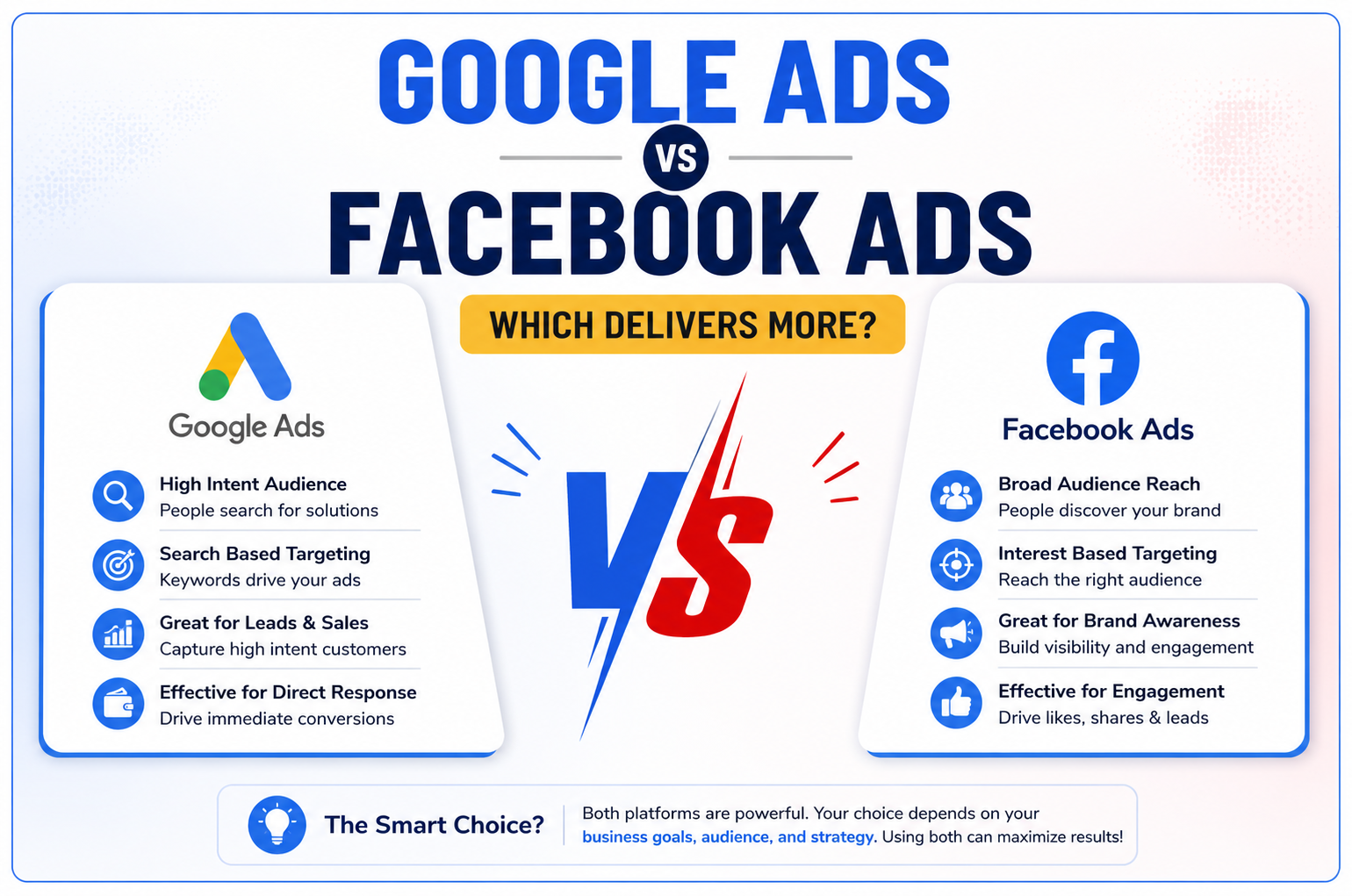
    Quick Takeaway: Google Ads helps you find new customers who are actively searching for your product or service with high intent. Facebook Ads helps new customers find you based on their interests, behaviors, and demographic profiles.

    What are Google Ads and How Do They Work?

    Google Ads is the world’s premier PPC advertising (Pay-Per-Click) platform. It operates primarily on the concept of search intent. When a user types a specific word or phrase into the Google search engine, they are actively looking for an answer, a location, or a product to buy. Google Ads allows businesses to bid on these specific keywords to display their sponsored links at the very top of the search engine results pages (SERPs).

    Beyond the core search network, the Google Ads benefits extend to the Google Display Network (visual banners on partner websites), YouTube advertising, Shopping ads, and local map listings. Because users are explicitly telling the search engine what they want at that exact millisecond, Google Ads boasts unparalleled immediate conversion potential.

    What are Facebook Ads and How Do They Work?

    While Google dominates search, Meta’s platform rules supreme over social media advertising. Facebook Ads is a paid social platform that operates on interruption marketing. Users do not log into Facebook or Instagram to find a plumber or buy software; they log in to connect with friends, watch videos, and view curated content.

    The immense power and core Facebook Ads benefits lie in its unparalleled demographic and behavioral targeting. Facebook tracks user interests, historical behaviors, life events (like engagements or moving cities), and digital habits. This allows advertisers to build highly detailed audience personas and display visually compelling ads directly within a user’s organic social feed, capturing interest long before a consumer even knows they need a specific solution.

    Google Ads vs Facebook Ads: Head-to-Head Comparison

    To truly evaluate Google Ads vs Facebook Ads for small business and enterprise scales alike, we must examine how they handle critical advertising metrics.

    1. Audience Intent

    Google wins on intent. Users have an active, immediate need (e.g., “emergency AC repair near me”). Facebook relies on passive intent; you are introducing your brand to a user who fits your ideal client profile but might not be ready to purchase today.

    2. Targeting Capabilities

    Google targets keywords and phrases, alongside physical locations and search history. Facebook targets people and identities, offering granular choices regarding hobbies, relationships, job titles, and lookalike audiences who mimic your best existing buyers.

    3. Facebook Ads vs Google Ads Cost (CPC)

    When looking closely at the Facebook Ads vs Google Ads cost breakdown, Facebook generally offers a significantly lower Cost Per Click (CPC). Google Ads keywords in competitive niches (like legal, insurance, or finance) can cost upwards of $50 per click due to high intent, whereas Facebook clicks frequently cost under $2.

    4. Conversion Rates

    Google Ads typically boasts a higher immediate conversion rate for transactional searches because the user is at the bottom of the sales funnel. Facebook conversion paths often take longer, requiring multiple touchpoints to convert a cold social browser into a verified client.

    5. Lead Generation & Brand Awareness

    Google is excellent for capture-oriented lead generation. However, Facebook is an absolute powerhouse for cost-effective mass brand awareness and top-of-funnel lead generation through native Lead Forms that don’t require the user to leave the social application.

    6. Retargeting & Ad Formats

    Both platforms excel at retargeting, but Facebook allows for more visually immersive ad formats. From engaging video stories and carousels to dynamic catalog layouts, Facebook brings aesthetic advantages, whereas Google relies more heavily on text-based layouts and standard display banners.

    7. ROI Potential

    Google provides quick, linear Return on Investment (ROI) for immediate sales. Facebook provides compounding long-term ROI by building a loyal community, generating brand equity, and nurturing custom audiences over time.

    Feature / Metric Google Ads Facebook Ads
    Core Focus Paid Search (Demand Capture) Paid Social (Demand Generation)
    User Intent High (Active Searchers) Low-Medium (Passive Browsers)
    Average CPC Higher (Dependent on keyword competition) Lower (More affordable per click)
    Targeting Base Keywords, Intent, Location Demographics, Interests, Behaviors
    Primary Ad Formats Text Ads, Shopping Tiles, YouTube Video Image, Video, Carousel, Stories
    Best For Immediate sales, urgent service requests Brand discovery, visual lifestyle goods

    When Should Your Business Choose Google Ads?

    Google Ads is your absolute best choice under the following conditions:

    • Urgent or Immediate Need: If you run a business that people require in an emergency situation (e.g., locksmiths, plumbers, tow trucks), nobody browses Facebook for help. They open Google.
    • High-Value B2B Software/Services: When buyers are seeking enterprise-grade ERP tools or specialized consultancies, they perform active, rigorous search research.
    • Healthy Marketing Budgets: If you can afford a higher CPC to guarantee your placement at the exact moment a buyer has their credit card in hand.

    When Should Your Business Choose Facebook Ads?

    Conversely, Facebook Ads should take strategic priority when:

    • Visually Dynamic or Unique Products: If your product relies heavily on aesthetics, apparel design, fitness transformations, or innovative gadgets that require video demonstrations to explain.
    • Building an Audience from Scratch: If you are introducing a brand-new concept or sub-category that has zero existing search volume on search engines.
    • Strict Budgetary Constraints: If you are a small business looking to maximize your visual reach and get thousands of digital impressions for a modest daily spend.

    The Ultimate Strategy: Combining Platforms for Maximum Growth

    The reality of the modern digital advertising comparison is that it shouldn’t be an “either/or” question. For the vast majority of growing brands, utilizing both networks simultaneously yields the highest return on ad spend (ROAS).

    Consider this powerful omni-channel ecosystem: You use Google Ads to capture high-intent search traffic from customers ready to buy immediately. Concurrently, you deploy Facebook Ads to target those exact website visitors who left without completing a purchase via sophisticated cross-channel retargeting campaigns. By keeping your brand visible on both their search engines and social feeds, you construct an omniscient digital presence that systematically converts cold traffic.

    Real-World Practical Scenarios

    1. Local Businesses (e.g., Local Dental Clinic):

    Use Google Ads for high-intent keywords like “dentist near me” or “teeth whitening clinic.” Use Facebook Ads locally to promote a friendly video tour, student discounts, or community milestones to build familiarity.

    2. E-commerce Stores (e.g., Sustainable Apparel Brand):

    Prioritize Facebook and Instagram Ads with rich video carousels showing real people wearing the clothing. Use Google Shopping Ads to catch users who search specifically for “organic cotton hoodies.”

    3. Service-Based Businesses (e.g., Residential Roofing):

    Rely heavily on Google Ads during stormy seasons when roofs need emergency repairs. Use Facebook Ads after a storm to showcase “before and after” pictures to specific neighborhoods.

    4. B2B Companies (e.g., HR Payroll Software):

    Bid on intent keywords like “automated payroll software for startups” on Google. Concurrently, use Facebook/Instagram Ads targeted at founders and HR managers offering a free whitepaper download.

    Expert Tips to Maximize Performance

    • For Google Ads: Always build out a robust list of negative keywords. This prevents your ad from showing up for irrelevant searches (e.g., ensuring your ad for “paid premium courses” doesn’t display when someone searches “free courses”).
    • For Facebook Ads: Prioritize creative testing. Swap out video hooks, thumbnails, and copy variations weekly to prevent ad fatigue within your target demographics.

    Common Mistakes to Avoid

    Many business owners burning through their budgets fall prey to simple structural mistakes. On Google Ads, using exclusively broad-match keywords can result in massive wasted spend on unrelated queries. On Facebook Ads, the most frequent error is over-segmenting audiences into tiny pools, which restricts Meta’s machine learning delivery system from optimizing properly. Lastly, failing to set up accurate conversion tracking pixels ensures you remain completely blind to your actual acquisition costs.

    Frequently Asked Questions (FAQ)

    Q1: Is Google Ads or Facebook Ads better for a small business with a tight budget?

    A: Facebook Ads usually offers a lower barrier to entry due to its cheaper average cost-per-click. However, if your small business addresses urgent services (like auto towing or locksmiths), Google Search remains critical despite higher costs.

    Q2: Can I handle both Google and Facebook advertising completely on my own?

    A: While the platforms are accessible, managing complex keyword bidding, negative matches, tracking pixels, and routine creative rotation requires specialized daily attention. Partnering with a digital agency usually saves money long-term by eliminating wasted ad spend.

    Q3: How much money do I need to start testing Google Ads?

    A: It varies by industry keyword costs, but we generally recommend a starting budget of at least $30 to $50 per day to accumulate enough data within a month to optimize effectively.

    Q4: What is a typical conversion rate for Facebook social media advertising?

    A: Across industries, the average conversion rate on Facebook sits around 1% to 3%. However, highly optimized retargeting campaigns and compelling visual offers can push this metric significantly higher.

    Q5: Do Facebook Ads affect my website’s organic SEO rankings?

    A: No, paid ads on Facebook or Google do not directly impact your organic search engine rankings. However, the increased traffic, brand searches, and social sharing can indirectly signal brand authority to major search networks.

    Ready to Maximize Your Return on Ad Spend?

    Settling the debate between Google Ads vs Facebook Ads comes down to aligned strategy, creative optimization, and expert analytical oversight. Don’t leave your advertising budgets to guesswork and algorithmic defaults.

    Contact our dedicated digital marketing agency team today for a customized paid advertising consultation!

    Scale Your Campaigns Today


  • How Meta Ads Generate Leads for Business Growth

    How Meta Ads Generate Leads for Business Growth

    How Meta Ads Generate Leads: The Ultimate Guide for High-Converting Campaigns

    Published on: June 15, 2026 | Category: Paid Social Media Marketing

    In today’s highly competitive digital landscape, capturing the attention of your target audience is only half the battle. The real challenge lies in turning that fleeting attention into structured, high-intent inquiries. If you have been wondering precisely how Meta Ads generate leads for businesses, you are not alone.

    With over 3 billion active daily users across Facebook, Instagram, Messenger, and the Audience Network, Meta provides an unparalleled ecosystem for B2B and B2C brands alike. By leveraging advanced machine learning algorithms, deep demographic mapping, and native conversion pathways, modern social media lead generation has transformed from a guessing game into a predictable, scalable science. This comprehensive guide breaks down exactly how to harness Meta’s full suite of tools to consistently fuel your sales funnel.

    What Are Meta Ads?

    Meta Ads refers to the comprehensive, centralized advertising network encompassing Facebook, Instagram, Messenger, and thousands of partner mobile applications. Managed entirely through the Meta Business Suite and Ads Manager, this environment allows enterprises to run highly targeted image, video, carousel, and collection advertisements.

    Rather than treating these platforms purely as social playgrounds, experienced marketers view them as data-driven engines built to address every stage of the marketing funnel. Whether your goal is brand awareness or direct-response customer acquisition, Meta’s infrastructure processes billions of behavioral signals to display your message to the exact individuals most likely to engage with your brand.

    Why Businesses Use Meta Ads for Lead Generation

    Deploying Facebook advertising for businesses is no longer optional for organizations aiming to maintain market relevance. Organizations globally prioritize Meta for customer acquisition due to three core structural advantages:

    • Granular Audience Precision: Beyond basic age and geographic parameters, Meta tracks granular behavioral patterns, detailed professional titles, purchasing habits, and core psychographic interests.
    • Algorithmic Efficiency: Meta’s predictive AI analyzes which users historically convert on lead forms, continuously optimizing ad delivery to minimize your cost per lead (CPL).
    • Frictionless User Experiences: By removing the necessity for users to navigate away from their active feeds, Meta minimizes drop-off rates and maximizes form completion velocity.

    How Meta Ads Generate High-Quality Leads

    A common misconception is that social platforms only drive volume, not value. In reality, understanding how Meta Ads generate leads that actually convert requires analyzing the multi-tiered conversion funnel engineered by Meta’s ecosystem.

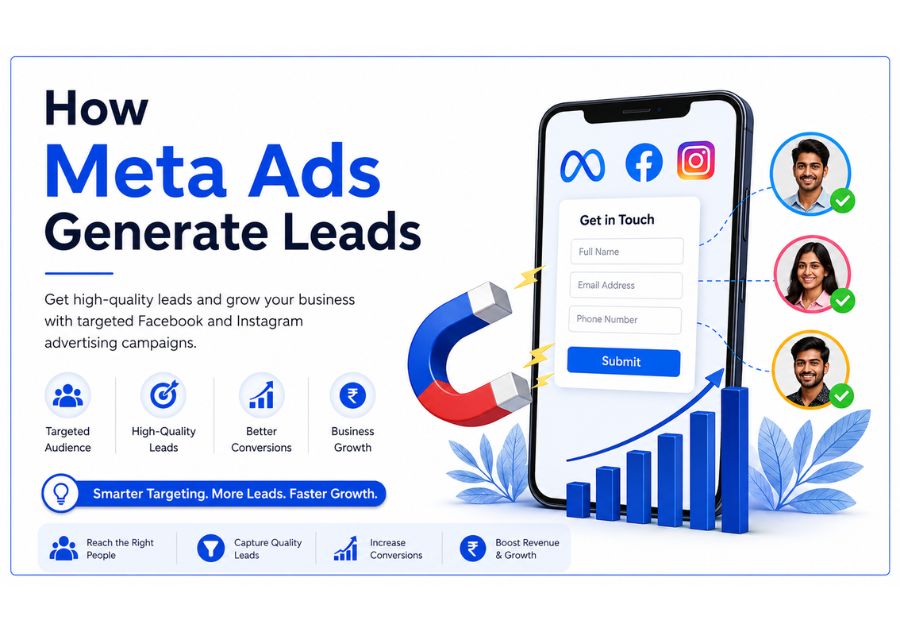
    The process begins with precise targeting via Lookalike Audiences (LAL) and Custom Audiences built from your existing CRM data. When a high-intent user interacts with your compelling ad creative, Meta utilizes interactive, auto-populated forms. Because these forms instantly ingest verified contact data from the user’s personal profile (such as their primary email address and phone number), structural errors and fake credentials are systematically reduced.

    Real-World Enterprise Example:

    A mid-sized B2B software provider utilized Custom Audiences to target decision-makers who visited their pricing page but didn’t book a demo. By launching targeted Facebook Lead Ads paired with an exclusive whitepaper download, they generated 450+ qualified enterprise leads in 30 days, reducing their target cost-per-acquisition (CPA) by 34%.

    Types of Meta Lead Generation Campaigns

    When setting up your lead generation campaigns, Meta allows you to select from several distinct operational mechanisms depending on your backend CRM layout:

    1. Instant Forms (Native Lead Ads): Contextual forms that load instantly inside the application. Best for high-volume conversion.
    2. Messenger & Automated Chats: Initiates an interactive, AI-driven conversation to pre-qualify prospects through custom question sequences before routing them to human sales professionals.
    3. Instagram Direct Messages (DMs): Capitalizes on Instagram Lead Ads to drive users directly into conversational commerce flows via direct messaging.
    4. External Web Conversions: Directs targeted traffic to dedicated external landing pages optimized via the Meta Pixel and Conversions API (CAPI).

    Facebook Lead Ads vs Landing Page Ads

    Choosing between native instant forms and external website architectures drastically impacts your conversion metrics. Below is an analytical comparison designed to guide your strategic framework:

    Feature / Metric Native Facebook Lead Ads External Landing Page Ads
    User Friction Extremely Low (Auto-populated fields) Higher (Requires external page load)
    Average Lead Volume High Volume Moderate Volume
    Lead Intent & Quality Variable (Requires custom qualification) Consistently High (Deep commitment)
    Tracking Requirements Zero setup (Native tracking) Complex (Meta Pixel + Conversions API)

    Benefits of Meta Ads for Businesses

    Investing your capital into structured paid social media marketing platforms delivers multi-layered institutional advantages:

    • Seamless CRM Synchronization: Instantly stream your incoming leads to platforms like HubSpot, Salesforce, or Zapier for immediate outreach.
    • Cost Optimization: Scale budgets fluidly, allocating capital dynamically toward ad sets delivering the lowest historical CPL.
    • Cross-Platform Distribution: Effortlessly run identical high-performing visual assets across both Facebook and Instagram feeds via unified campaigns.

    Best Practices for Generating More Leads with Meta Ads

    To maximize your return on ad spend (ROAS), build your lead generation strategies around these verified execution frameworks:

    1. Lead with Irresistible Lead Magnets

    Stop asking for personal details without offering equal value. Provide exclusive whitepapers, localized case studies, free tool trials, or customized corporate audits.

    2. Implement Intent Filters within Native Forms

    When utilizing Instant Forms, toggle the “Higher Intent” option. This injects a confirmation step, giving users an explicit opportunity to review their information before submission.

    3. Blend Custom Broad Questions

    Incorporate at least two customized multiple-choice or short-answer questions. This disrupts automatic scrolling and filters out unmotivated individuals.

    Common Mistakes to Avoid

    Even robust marketing budgets can fail without precise execution. Avoid these catastrophic pitfalls:

    • Over-complicating the Lead Form: Every additional custom field requested reduces your conversion probability by up to 15%. Keep inputs minimal.
    • Ignoring Immediate Follow-ups: Conversion rates drop significantly if inbound leads aren’t contacted within the first five minutes of form submission.
    • Failing to Exclude Past Converts: Always apply exclusion filters to prevent spending ad budget on users who have already entered your sales pipeline.

    How to Measure Meta Ads Lead Generation Success

    True campaign health goes far beyond vanity metrics like post engagement or clicks. Professional performance marketers evaluate performance using these strict parameters:

    • Cost Per Lead (CPL): Total ad spend divided by total validated leads acquired.
    • Lead-to-Opportunity Conversion Rate: The percentage of inbound leads that satisfy pipeline sales qualification criteria.
    • Form Completion Rate: The proportion of platform users who initiated a form click and completed the conversion sequence.

    The Future of AI-Powered Lead Generation

    As data privacy regulations tighten, the future of marketing relies heavily on artificial intelligence. Meta’s **Advantage+ Lead Campaigns** represent this paradigm shift. By giving Meta’s core AI baseline parameters, the algorithm autonomously tests thousands of copy variations, visual placements, and audience matches. Embracing these machine-learning architectures is critical for businesses looking to scale acquisition efficiency.

    Conclusion

    Understanding exactly how Meta Ads generate leads unlocks a predictable mechanism for scaling customer acquisition. By matching compelling creatives, frictionless native instant forms, and advanced Advantage+ target parameters, Meta remains an unmatched powerhouse for B2B and B2C lead generation. Stop guessing and start building a systematic funnel that turns casual social media scrolling into revenue.

    Ready to Scale Your Inbound Pipeline?

    Don’t waste valuable capital on unoptimized campaigns. Partner with our premier meta advertising services team to engineer high-converting campaigns that drive authentic business growth. Maximize your ROAS today.

    Get Meta Ads Services

    Frequently Asked Questions

    How do Meta Ads generate leads?

    Meta Ads generate leads by displaying highly targeted creative elements to precise audience groups. Users can submit their verified contact details instantly via native, auto-populated forms or optimized external landing pages.

    Are Meta Ads effective for small businesses?

    Yes, exceptionally so. Thanks to budget fluidity, small businesses can begin with modest daily budgets, validate target audiences, and scale investment entirely based on measurable cost-per-lead (CPL) success.

    What is the difference between Facebook Lead Ads and website conversion ads?

    Facebook Lead Ads keep users entirely within the native platform app utilizing fast, pre-filled forms. Website conversion ads drive the targeted prospect out to an external landing page hosted on your domain.

    How much does Meta lead generation cost?

    Costs vary widely depending on market competition, target industry vertical, and geography. While B2C sectors frequently experience CPLs between $2 to $10, competitive enterprise B2B spaces often range from $30 to $100+ per lead.

    How can I improve lead quality from Meta Ads?

    To elevate lead intent, use “Higher Intent” native configurations, inject custom open-ended questions, offer high-value programmatic lead magnets, and continuously refine targeting exclusions using active CRM data.

  • Social Media Marketing Trends 2026 for Business Growth

    Social Media Marketing Trends 2026 for Business Growth

    Social Media Marketing Trends 2026: What Businesses Need to Know

    A Definitive Guide to Navigating the Future of Social Media Marketing

    The digital space is shifting rapidly. In 2026, social networks are no longer just for basic updates or generic ads—they are ecosystems driven by hyper-personalization, intelligent automation, and frictionless commerce. For brands aiming to catch the eyes of consumers, old playbooks fail. Success requires proactive adaptation to modern consumer touchpoints.

    To build a thriving social media strategy 2026, companies must look at how technology changes buyer habits. This year, the forces shaping the market are rooted in sophisticated AI in social media marketing, automated workflows, and fast video formats. Adapting early separates market leaders from brands that fade away into obscurity.

    Key Industry Insight

    By mid-2026, active social networks are projected to reach 5.4 billion global users. Over 65% of buyers state that their commercial choices are directly influenced by native social shops and automated messaging tools.

    Why Social Media Marketing Matters More Than Ever in 2026

    Active user numbers have hit historic highs across channels, introducing extreme market saturation. Consumers face constant message bombardment, leading to high ad fatigue and short attention spans. Standard advertising setups struggle to yield acceptable returns, forcing corporations to rethink outreach.

    Securing consumer engagement and long-term brand awareness demands absolute precision. Social feeds are where initial brand sentiment forms and thrives. Businesses leveraging forward-looking digital marketing trends 2026 can build deeper consumer relationships, ensuring reliable brand loyalty and growth in a crowded arena.

    Top Social Media Marketing Trends 2026

    AI-Powered Content Creation and Personalization

    Smart systems have moved beyond basic text drafting. Today, AI in social media marketing allows brands to analyze data metrics instantly to deliver customized graphics, contextual copy, and dynamic variations tailored to user profiles. Predictive analytics accurately forecast how specific groups respond to content assets.

    Short-Form Video Continues to Dominate

    As a central driver within video marketing trends 2026, short vertical clips—Reels, Shorts, and TikTok videos—remain the absolute kings of organic reach. Algorithm setups prioritize fast video narratives over text, generating up to 4x higher interaction rates across main demographics.

    • Hook users in the first 1.5 seconds using strong visual cues.
    • Focus heavily on educational insights or fast problem-solving value.
    • Value authenticity; raw, genuine footage outpaces overly polished corporate clips.

    Social Commerce Becomes Mainstream

    The friction between product discovery and checking out has vanished. Driven by explosive social commerce trends, networks have built complete native store engines. With embedded secure payment gateways, consumers buy products instantly without leaving their feeds.

    +38%
    Average conversion rate increase via integrated native checkouts versus external redirects.

    Influencer Marketing Evolves

    The era of shallow metric tracking is over. Recent influencer marketing trends show a major shift away from macro-celebrities toward micro and nano influencers with hyper-focused followings. Audiences demand real transparency, trusting relatable creators over generic celebrity endorsements.

    User-Generated Content Gains More Value

    User-Generated Content (UGC) acts as ultimate social proof. Buyers trust peer reviews and raw user testimonials far more than traditional ads. Showcasing real people interacting with your brand builds immediate credibility that corporate design cannot match.

    AI Chatbots and Conversational Marketing

    Fueled by major developments in social media automation, smart bots manage consumer inquiries with impressive fluidity. These tools offer immediate replies, answer catalog questions, provide product suggestions, and nurture new leads 24/7.

    Privacy-First Marketing Strategies

    Strict compliance rules and the complete removal of third-party tracking have altered social media advertising trends. Marketers can no longer rely on external cookie histories. Campaigns must shift toward building secure first-party data structures.

    Social Listening and Brand Monitoring

    Brand safety requires proactive monitoring rather than reactive responses. Implementing automated sentiment listening tools lets companies track active digital discussions, scan keyword mentions, and evaluate competitor metrics clearly to safeguard trust.

    Rise of Community-Based Marketing

    As public feeds become crowded, user interactions are shifting to private spaces. Closed groups, subscriber channels, and specialized forums are the new centers for community marketing, helping companies build high-value customer relationships.

    Cross-Platform Content Strategies

    Relying on a single network carries significant structural business risk. Sophisticated content strategies ensure maximum distribution by adapting a core creative asset into specific pieces built for separate channels and emerging social platforms.

    How Businesses Can Prepare for Social Media Marketing in 2026

    Winning in this changing environment requires active preparation. Brands must update workflows to build operational agility. Focus on these strategic pillars:

    • Invest in AI Tools: Adopt automated scheduling, smart content engines, and predictive analytics.
    • Prioritize Video Pipelines: Dedicate resources to scale continuous vertical clip production.
    • Build Private Communities: Create closed communication spaces to cultivate deep interactions.
    • Value Transparency: Swap rigid ads for open customer engagement and real conversations.
    • Track Metrics: Base all marketing adjustments on hard data and first-party conversion tracking.

    Benefits of Following the Latest Social Media Marketing Trends

    Syncing your brand’s digital strategies with current social media marketing trends 2026 converts social profiles into major corporate revenue drivers:

    • Increased Engagement: Delivers algorithmic preference, scaling organic impressions easily.
    • Better Lead Generation: Attracts qualified prospects using targeted dynamic assets.
    • Higher Conversions: Streamlines sales via integrated, native in-app checkout networks.
    • Improved Brand Awareness: Establishes a clear presence within crowded industries.
    • Competitive Advantage: Keeps your organization ahead of slower, traditional competitors.

    Why Choose Professional Social Media Marketing Services?

    Managing a multi-channel presence demands deep technical platform knowledge. Collaborating with an expert agency guarantees your corporate strategy stays updated against sudden algorithm adjustments to sustain long-term business growth.

    A dedicated digital agency handles your entire social footprint across crucial execution pillars:

    • Expert Strategy Development: Building customized blueprints mapped to your business targets.
    • Content Creation: Generating high-impact short videos, graphic layouts, and persuasive ad copy.
    • Paid Advertising Campaigns: Deploying optimized media spend using custom audience segments.
    • Analytics and Reporting: Offering clear conversion clarity to ensure long-term business growth.

    Frequently Asked Questions (FAQ)

    What are the biggest social media marketing trends in 2026?

    The dominant pillars of social media marketing trends 2026 include AI content personalization, native app social commerce, authentic micro-influencer campaigns, and first-party data community models.

    How is AI changing social media marketing?

    AI in social media marketing automates real-time asset variation creation, manages conversational customer care through chatbots, and processes predictive audience analytics to maximize targeting accuracy.

    Why is short-form video important in 2026?

    Short vertical clips dominate the future of social media marketing. Algorithms favor these interactive pieces, providing brands with superior organic reach and higher viewer connection metrics.

    What is social commerce?

    Modern social commerce trends represent the complete integration of digital checkout paths directly into social networks, enabling users to purchase items natively without leaving the app.

    How can businesses improve their social media strategy?

    Organizations can optimize their social media strategy 2026 by embedding responsive automation, ramping up vertical video clip pipelines, and cultivating transparent private brand communities.

    Ready to Upgrade Your Strategy for 2026?

    Don’t let your brand get left behind by fast-evolving algorithms. Contact our professional Social Media Marketing Agency today to launch a custom strategy engineered for customer acquisition, ad efficiency, and long-term business growth.

    Contact Our Experts Today