What is Social Media Management? The Ultimate Growth Guide
Ready to transform your online channels into highly profitable engines? Effective Social Media Management helps you cut through the digital noise, build authentic brand trust, and systematically turn casual platform scrollers into loyal customers.
Industry Data Point
Recent consumer data reveals that 78% of online searchers prefer buying from brands that provide helpful customer care via social channels rather than automated phone lines.
Table of Contents
- 1. Introduction to Modern Audience Building
- 2. What is Social Media Management?
- 3. Why Social Media Management Matters
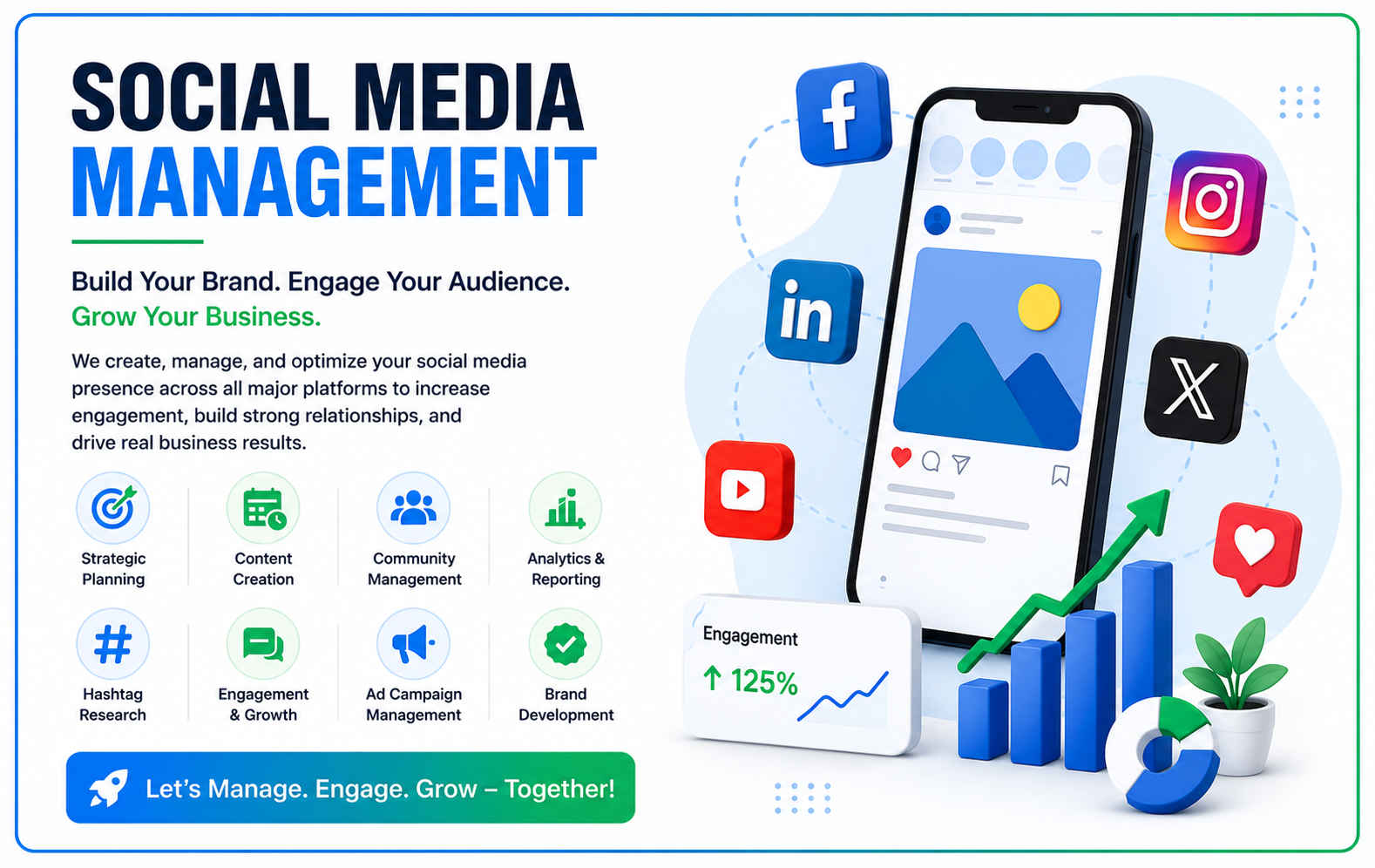
- 4. Core Social Media Management Services
- 5. Platforms Managed Strategically
- 6. The Strategic Blueprint Process
- 7. Business Verticals That Profit Most
- 8. Common Pitfalls to Avoid
- 9. Actionable Optimization Tips
- 10. In-House vs. Professional Management
- 11. Frequently Asked Questions
Modern business survival requires a hyper-focused strategy. Brands no longer rely simply on local foot traffic or cold outbound email sequences to stay afloat. Instead, your future customer base reads consumer reviews, looks up your company on social networks, and engages with your media day and night.
Consequently, launching an active web presence is crucial. If your brand publishes erratic updates or ignores inbound comments, you open the door wide for your direct competitors to step in. A streamlined system handles this heavy lifting, allowing you to focus on your primary operational tasks.
Ultimately, this discipline transforms your cold profiles into trusted community channels. When you regularly publish useful insights, you generate deep brand awareness and establish long-term customer relationships. Let’s look closer at how this functional mechanism impacts your bottom-line sales metrics.
What is Social Media Management?
At its core, Social Media Management is the organized practice of creating, publishing, auditing, and analyzing media across public channels like Facebook, Instagram, LinkedIn, and YouTube. It extends far beyond clicking a button to post a casual picture. It requires a balanced mix of creative design, data analytics, and real-time customer support.
A dedicated Social Media Manager takes full control of these networks. Their day-to-day workflow includes mapping out editorial calendars, refining brand graphics, monitoring brand performance, and answering direct messages from prospective clients.
The ultimate goal of this corporate asset is sustainable, organic online brand management. By setting up predictable publishing systems, small businesses can easily build authority, lower their customer acquisition costs, and maximize their advertising ROI.
Why Social Media Management Matters
Without a structured media distribution plan, your brand remains virtually invisible. An ongoing investment in web management pays substantial dividends by expanding your overall market reach and building reliable customer trust.
First, consistent updates build exceptional brand awareness. When your business profile provides actionable answers to common client questions, social algorithms reward that content with broader distribution. This organic visibility shifts your marketing funnel from expensive outbound tactics to highly efficient inbound channels.
Second, active digital platforms foster reliable consumer confidence. When an interested buyer lands on a business page and notices active conversation, quick response times, and polished aesthetics, they feel secure moving forward with a purchase.
Core Social Media Management Services
Deploying comprehensive digital solutions requires multiple distinct disciplines. Enterprise-level campaigns typically integrate these essential operational components:
1. Data-Driven Content Planning
A successful strategy avoids random, last-minute posting. Instead, teams map out a structured content calendar at least thirty days in advance. This approach balances educational pieces, product updates, and interactive community polls to keep your channels highly engaging.
2. Specialized Social Media Content Creation
This step includes designing custom brand visuals and editing vertical videos for Reels or Shorts. Polished media captures immediate attention in crowded feeds, while expertly written captions encourage users to click through to your website landing pages.
3. Proactive Community Management
Profiles shouldn’t function like one-way billboards. Dedicated community managers actively handle comments, answer direct product questions, and spark dialogue under every update. This personal interaction turns passive viewers into true brand advocates.
4. Advanced Analytics & Competitor Tracking
Growth requires clear numbers, not guesswork. Monthly performance reports audit key data points like impression share, click-through rates, and audience demographic shifts. This continuous review lets teams double down on the creative formats that drive actual business conversions.
Platforms Managed Strategically
Every social channel features unique demographic profiles, specialized technical formats, and distinct content delivery algorithms.
| Platform | Primary Audience Focus | Winning Content Format |
|---|---|---|
| Facebook Management | B2C Consumers & Local Communities | Long-form Video, Community Events, Discussions |
| Instagram Management | Millennials & Gen Z Buyers | Vertical Reels, Carousel Graphics, Story Sales |
| LinkedIn Management | B2B Professionals, SaaS & Corporate Founders | Industry Insights, PDF Slide Decks, Thought Leadership |
| Google Business Profile | Local High-Intent Physical Searchers | Geotagged Photos, Review Prompts, Offer Updates |
The Social Media Management Process
Achieving consistent social media growth requires a repeatable, step-by-step strategy. This execution framework keeps campaigns running smoothly:
- Deep Business Analysis: Audit your existing active profiles, brand assets, and core commercial goals.
- Granular Target Audience Research: Identify exactly where your perfect customers look for solutions.
- Strategic Social Media Marketing Roadmapping: Define your key performance indicators (KPIs) and core content pillars.
- Dynamic Content Creation: Design high-performing visual assets and write engaging captions.
- Automated Social Media Scheduling: Queue your updates at optimal time slots to maximize reach.
- Live Monitoring and Interaction: Handle comments and messages to secure organic conversions.
- Continuous Monthly Optimization: Tweak your creative assets based on real audience data.
Business Verticals That Profit Most
Strategic digital management delivers massive value across diverse market sectors. For instance, **e-commerce stores** rely heavily on high-impact visual feeds to boost direct sales. Meanwhile, **local dental and medical clinics** use educational content to build patient trust within their local communities.
In high-ticket spaces like **real estate and corporate consulting**, specialized platforms build deep industry authority. Consistently sharing case studies and client wins positions your firm as the obvious market leader, accelerating your sales cycle.
Common Pitfalls to Avoid
Many businesses accidentally stall their own online progress by falling into predictable execution traps. Review this list to keep your profiles safe from simple mistakes:
- Irregular Publishing Routines: Ghosting your community for weeks signals that your business might be closed.
- Ignoring User Comments: Leaving inbound client questions completely unanswered kills trust.
- Buying Fake Followers: This trick ruins your organic engagement metrics and triggers shadowbans.
- Overly Promotional Feeds: Treating channels like sales brochures drives users away.
- Ignoring Account Analytics: Flying blind guarantees you waste budget on ineffective content.
Actionable Optimization Tips
Want to quickly improve your channel metrics? Put these immediate workflow upgrades into action this week:
- Write Clear Hooks: Capture attention in the first two seconds of video scripts or text descriptions.
- Optimize Your Bios: Ensure your business profile clearly explains the exact problems you solve.
- Include Clear CTAs: Direct readers on exactly what to do next with clear “Click Link in Bio” prompts.
- Repurpose High-Performing Content: Turn successful long-form articles into quick carousel graphics or short videos.
In-House vs. Professional Management
Many founders try to handle everything alone or hand these tasks off to an overworked internal assistant. However, this move often backfires, leading to erratic content quality and missed opportunities.
“Outsourcing your social execution gives you instant access to a dedicated team of professional copywriters, graphic design experts, and analytics pros for a fraction of the cost of full-time hires.”
Partnering with specialized Social Media Management Services ensures your strategy stays consistent, adapts to daily algorithm updates, and drives measurable revenue growth.
Ready to Scale Your Brand Engagement?
Building a highly profitable online community shouldn’t leave you feeling burnt out. Let our veteran production specialists handle your daily content planning, creative design, and growth optimization while you focus on running your business operations.
Request an Expert Consultation
Frequently Asked Questions
What is Social Media Management?
It is the comprehensive process of creating, planning, scheduling, analyzing, and engaging with content across social networks to build an audience and meet clear business goals.
Why is Social Media Management important?
It builds brand awareness, fosters customer trust, improves customer retention, and creates a reliable organic channel for inbound lead generation and website traffic.
How much do Social Media Management services cost?
Pricing usually scales based on project scope, ranging from $500 per month for basic startup packages to over $5,000 per month for enterprise multi-channel strategies handled by a dedicated agency.
Which platforms should my business use?
Focus strictly on the platforms where your target audience spends their time. For example, B2B companies excel using LinkedIn, while e-commerce brands see higher conversions on Instagram and TikTok.
How often should I post?
Consistency is much more important than raw volume. A good starting point is 3 to 5 high-quality posts per week on platforms like Instagram and Facebook, and 1 to 2 times daily on fast-paced networks like X.
Does Social Media Management increase sales?
Yes. By building a highly engaged audience and guiding them down a clear marketing funnel, it directly increases warm inbound leads and e-commerce revenue over time.
How long does it take to see results?
Organic growth requires patience. While engagement spikes can happen quickly, measurable business conversion improvements generally take 3 to 6 months of steady execution.
How do I choose the right Social Media Management company?
Look for a partner with proven case studies in your niche, clear reporting models, and a deep focus on business ROI over vanity metrics like follower counts.