
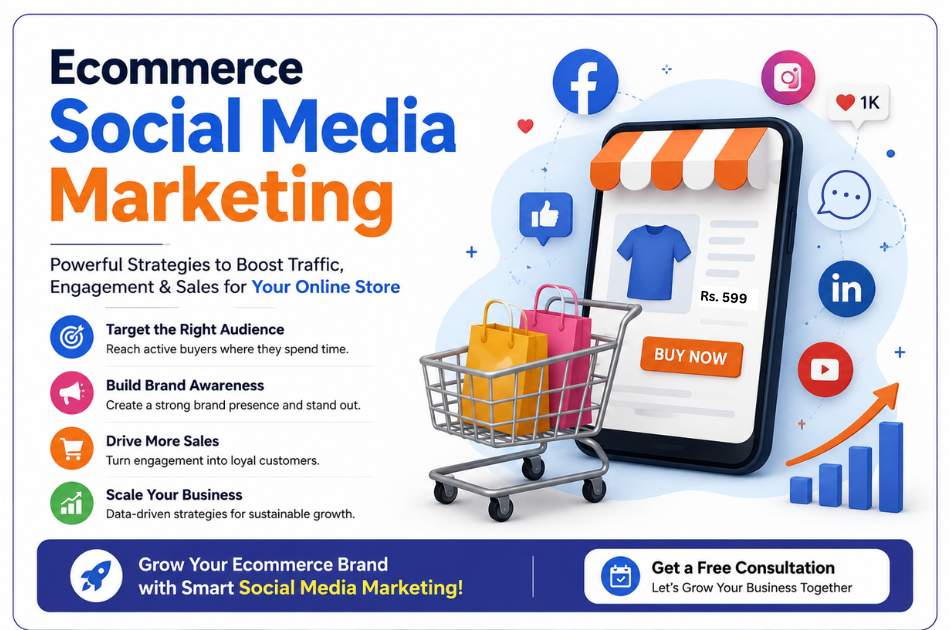
The Ultimate Guide to Ecommerce Social Media Marketing: Drive Traffic, Engagement, and Explosive Sales
In today’s digital marketplace, launching an online store is only the first step toward business success. With millions of brands competing for attention, how do you ensure your products stand out? The answer lies in a robust, data-driven Ecommerce Social Media Marketing campaign. Social media platforms have evolved from simple communication networks into powerful marketplace engines, fundamentally changing how consumers discover, interact with, and purchase products.
Whether you are an established brand aiming for rapid ecommerce brand growth or a startup launching your first store, mastering Ecommerce Social Media Marketing is non-negotiable. This comprehensive guide explores actionable methodologies, platform dynamics, and proven frameworks to transform your social channels into high-yielding revenue streams.
Is Your Store Reaching Its Full Potential?
Maximize your revenue with a tailored marketing roadmap. Claim your complimentary strategy session today.
What is Ecommerce Social Media Marketing?
At its core, Ecommerce Social Media Marketing is the practice of utilizing social media networks to market an online store, build brand equity, drive qualified website traffic, and directly acquire customers. This specialized branch of digital marketing encompasses organic content creation, community management, influencer partnerships, and sophisticated paid ecommerce social media advertising campaigns.
Unlike traditional lead-generation campaigns, marketing via social media for online stores focuses heavily on visual commerce, frictionless checkout experiences, and instantaneous consumer actions. In 2026, successful Ecommerce Social Media Marketing merges social interactions with native shopping tabs, immersive video content, and automated customer support conversational funnels to create a unified buyer journey.
Why Social Media Marketing Matters for Ecommerce Businesses
Relying solely on organic search engine traffic or basic email newsletters is no longer sufficient to scale an online business. Implementing a dynamic social media marketing for ecommerce plan is essential for several critical reasons. First, visual commerce provides instant product discovery. Through optimized Ecommerce Social Media Marketing, brands can present products via interactive 3D models and high-definition galleries.
Second, it leads to elevated ecommerce customer engagement. Social networks bridge the gap between anonymous transactions and meaningful relationships. Cultivating conversational touchpoints yields higher customer retention and long-term loyalty. Third, it allows hyper-targeted acquisition. Advanced data modeling and tracking pixels allow you to display specific items to users based on precise buying intents and detailed behavioral habits.
Finally, it amplifies social proof. User-generated content (UGC), real-time customer reviews, and influencer endorsements create peer-to-peer trust that accelerates conversion metrics faster than conventional copywriting. To succeed, your ecommerce marketing strategy must align with these consumer behaviors.
Top Social Media Platforms for Ecommerce Marketing
When evaluating channels, Instagram remains the undisputed leader for product discovery. With seamlessly integrated native shopping features like product tagging, shoppable Reels, and curated creator storefronts, users can transition from browsing to buying within seconds. Investing in specialized Instagram Marketing Services helps businesses fully tap into these direct-purchase capabilities as part of their Ecommerce Social Media Marketing framework.
Despite changing demographics, Facebook’s massive active user database offers unmatched opportunities for targeted paid campaigns. Utilizing dynamic product catalog ads allows online retailers to automatically display relevant items to users who previously engaged with their websites. Partnering with top-tier Facebook Ads Services can significantly optimize conversion costs within your broader Ecommerce Social Media Marketing setup.
Proven Ecommerce Social Media Marketing Strategies
Succeeding in competitive online spaces requires moving beyond sporadic updates. First, leverage authentic user-generated content (UGC) by incentivizing your existing customer base to post videos and unboxing experiences. Sharing authentic customer content on your main feeds builds profound consumer trust.
Second, deploy smart retargeting funnels. A large percentage of shoppers abandon carts on their initial visit. Use advanced ecommerce social media advertising to re-engage warm prospects with limited-time discount codes or free shipping incentives. Third, integrate immersive social commerce by setting up native shops directly on Instagram, and Pinterest to reduce checkout friction and enhance your overall Ecommerce Social Media Marketing performance.
Uncover Hidden Revenue Opportunities
Get a comprehensive evaluation of your brand visibility, tracking setup, and competitor landscape.
Common Mistakes to Avoid
Many online brands pour substantial budgets into digital promotions without seeing tangible returns due to easily rectifiable operational errors. When executing Ecommerce Social Media Marketing, avoid prioritizing vanity metrics over conversions. High follower numbers look impressive, but your main focus should be on trackable metrics like click-through rates (CTR), add-to-cart ratios, and return on ad spend (ROAS). Also, avoid overly promotional feeds. Balance your sales pushes with entertaining educational reels and behind-the-scenes content.
Benefits of Hiring a Professional Social Media Marketing Agency
Managing creative content creation, complex data analytics, community engagement, and ad spend budget optimization internally can quickly overwhelm growing business teams. Partnering with a specialized team provides immediate advantages. Experienced agencies bring years of refined cross-industry insights to construct an optimized, high-converting ecommerce marketing strategy tailored to your unique market positioning, ensuring your investment in Ecommerce Social Media Marketing delivers measurable results.
Instead of dividing your focus among multiple internal tasks, your core team can focus heavily on inventory logistics and customer fulfillment while experts handle your paid advertising assets. You also gain access to cutting-edge tools for precise audience tracking and deep behavioral analytics without costly standalone subscriptions. From implementing technical tracking tags to managing comprehensive Digital Marketing Services, an agency partner helps you scale predictably. If your underlying platform needs an overhaul, consider integrating comprehensive Ecommerce Website Development Services to ensure a smooth customer journey.
Frequently Asked Questions (FAQs)
Q1: How much budget should I allocate to paid ecommerce social media advertising?
A: For startups, we recommend starting with a modest testing budget of $500 to $1,000 per month to identify winning product creatives. Established brands aiming for rapid ecommerce brand growth often allocate 10% to 25% of their gross monthly revenue toward scaled ad campaigns.
Q2: Which platform yields the best returns for Ecommerce Social Media Marketing?
A: Instagram and Facebook remain the most consistent channels for generating a steady return on investment across most consumer niches due to their mature ad targeting infrastructure.
Q3: How often should an online store post new content on social media channels?
A: Consistency is critical. We recommend publishing 3 to 5 short-form videos or high-quality image posts per week on video-centric channels like Instagram, while actively publishing daily updates to your Stories to maintain high ecommerce customer engagement metrics.
Q4: What is the difference between organic reach and paid advertising?
A: Organic marketing involves creating and publishing content to engage your existing follower base without direct payment, relying entirely on platform algorithms. Paid advertising involves allocating direct media spend to push your specific product offers directly onto the feeds of highly targeted prospects.
Q5: Can I execute an effective marketing strategy without hiring an agency?
A: Yes, small startups can successfully manage their initial outreach in-house. However, as product catalogs expand and ad spends grow, partnering with professional digital marketing experts helps prevent costly ad fatigue, optimize your creative workflows, and maximize long-term profitability.
Conclusion
Mastering Ecommerce Social Media Marketing requires finding the right balance between striking visual storytelling, data-backed conversion optimization, and authentic community connections. By selecting the right digital platforms, leaning into user-generated video assets, and continuously refining your paid ad spend, you can transform simple social feeds into highly predictable sales engines.
Don’t let your target audience browse past your brand. Partnering with dedicated professionals allows you to scale your customer outreach smoothly through comprehensive Ecommerce Social Media Marketing strategies. Take the first strategic step toward sustainable growth today.
Ready to Scale Your Online Store’s Sales?
Connect with our team of elite digital marketing strategists today. Let’s design an optimized blueprint to maximize your acquisition metrics and drive customer loyalty.
Leave a Reply